
Yes. You can go swimming on your period. The pool, the ocean, and swim practice do not have to wait. The only real decision is what you wear in the water, because a regular pad will not stay put.
Why people think you cannot
A lot of the worry is “everyone will see” or “the water will turn red.” In a chlorinated pool, a small amount of blood is diluted immediately. Other swimmers are not going to notice. The water also presses against your body, so flow often looks lighter while you are in the pool. It does not stop. When you get out, it can pick up again.
What actually works in the water
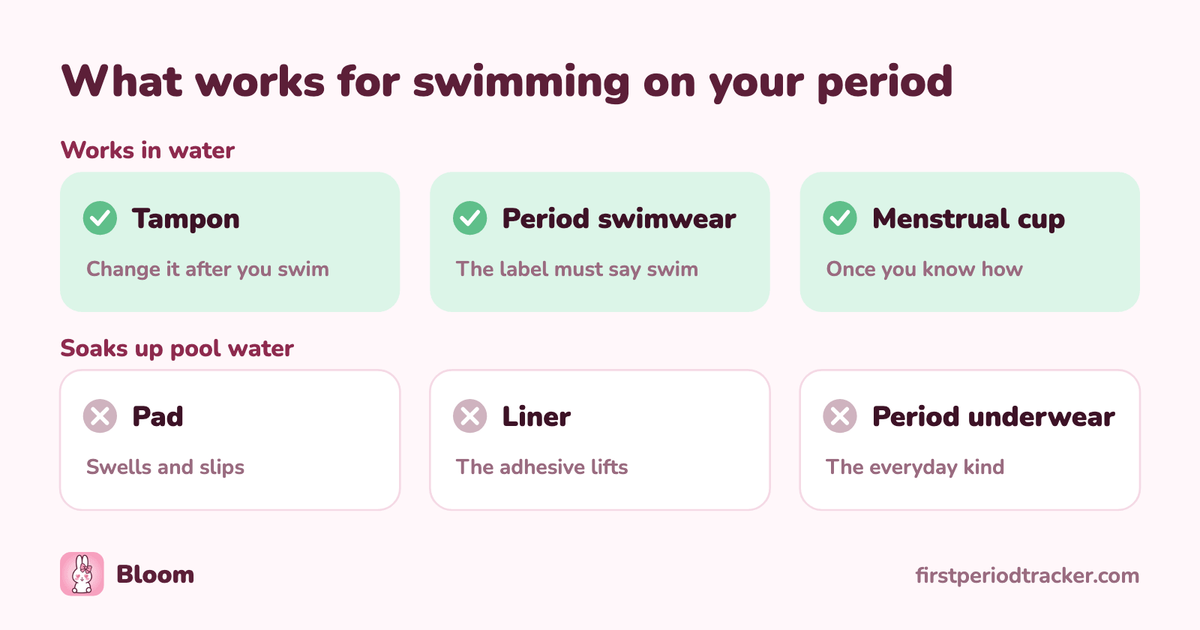
A tampon. This is the usual answer for swimming. It sits inside, so pool water does not reach the blood, and nothing shows under a swimsuit. If you have never used one, read tampons for teens, the first time with a parent a few days before the swim day. Change it when you get out. Do not leave one in all afternoon.
Period swimwear. Some period underwear is made to swim in. Ordinary period underwear is not. If the label does not say it is for swimming, treat it like a pad: it will soak up pool water and stop doing its job. The period underwear guide covers which kind is which.
A menstrual cup, if someone older has already taught you and you are comfortable with it. Same idea as a tampon: it stays in, you empty it after.
What does not work
A pad, a liner, or folded toilet paper. Water lifts the adhesive, the pad swells, and it can slip out of a swimsuit. Pads and liners are for dry land.
If you are not ready for a tampon
Skipping the pool that day is a fine choice. Lots of people do, especially on a first period or a heavy day. You can also ask a parent to practice a tampon at home on a day that is not a swim day, so the first try is not at school.
If the period starts at the pool and you have nothing with you, the plan is the same as getting your period at school: bathroom, ask a friend or the front desk for a tampon or pad, and sit out the water until you have one that works in it.
A small kit for swim days
Keep a tampon (once you use them), a pad for afterward, and spare underwear in a zip pouch in your swim bag. The first period kit checklist is the same list, plus a code word with a parent if you want to text for a pickup.
When to tell an adult
Swimming itself is not a medical problem on your period. Tell a parent or a doctor if the bleeding is heavy enough that you soak through protection every hour, you feel dizzy, or cramps are so strong you cannot get in the water at all. Heat and the other ideas in the cramp toolkit help a lot of people on day one, which is often the heaviest day.
Bloom is a period app made for first periods: no account, and everything stays on your phone. Learn is free forever; tracking has a short free peek, then an optional subscription. A note of which days you swam, and which days you sat out, is enough of a log.